
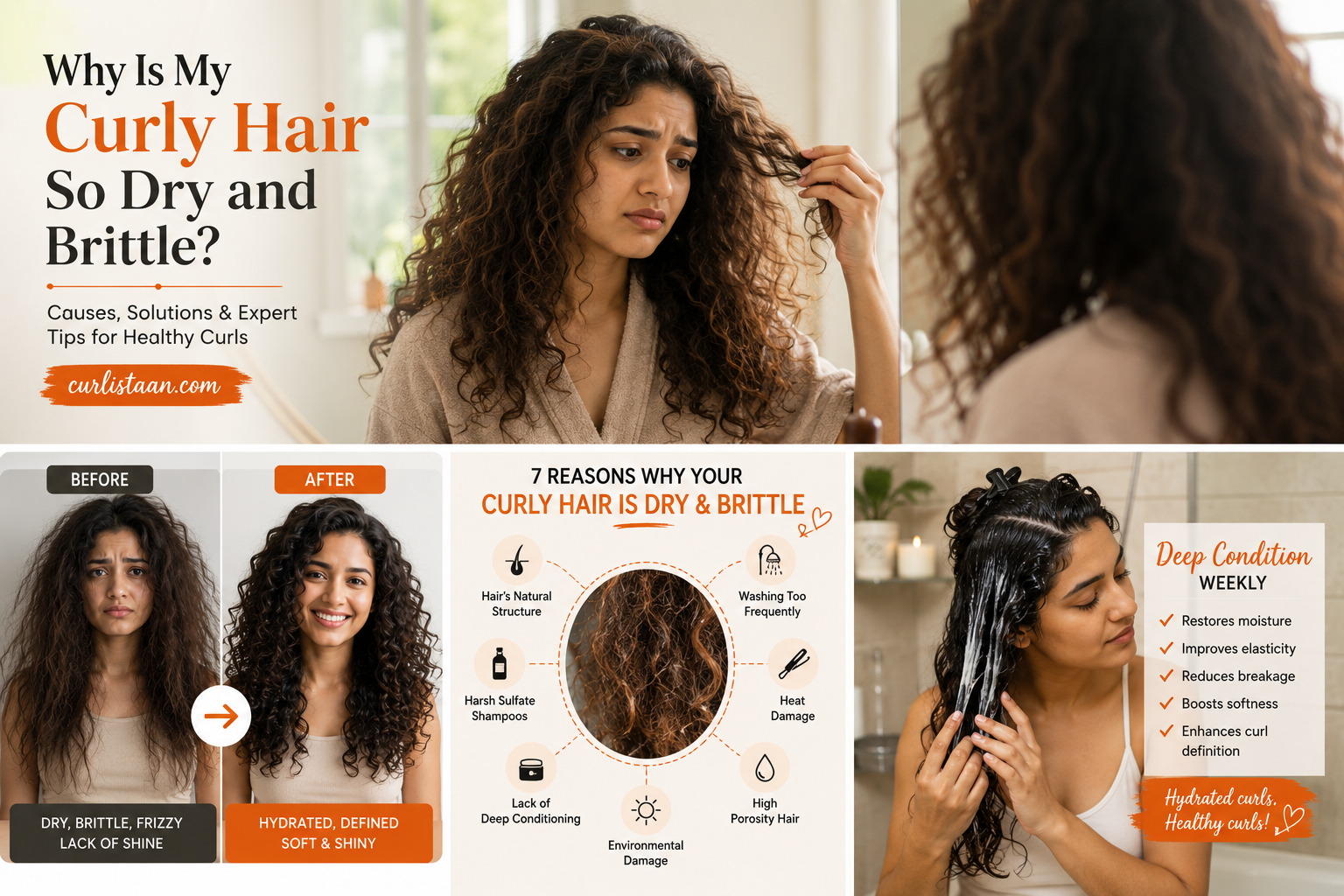
7 Reasons Why Your Curly Hair Is Dry and Brittle
1. Your Hair’s Natural Structure
The biggest reason curly hair struggles with dryness is its shape.
The spiral structure prevents scalp oils from coating each strand evenly. While straight hair receives moisture more easily, curls often remain dry, especially at the ends.
This is completely normal but requires targeted hydration.
2. Washing Too Frequently
Many people unknowingly strip their hair of natural oils by washing too often.
Frequent shampooing removes dirt but can also remove essential moisture. Curly hair usually doesn’t need daily washing.
If your curls feel dry after every wash, your shampoo routine may be contributing to the problem.
Switching to a gentle, moisturizing cleanser can make a significant difference.
3. Lack of Deep Conditioning
Conditioner is important, but deep conditioning is where curly hair truly thrives.
Deep conditioning treatments help:
- Restore hydration
- Improve elasticity
- Reduce breakage
- Increase softness
- Enhance curl definition
Without regular deep conditioning, curls can quickly become dry and fragile.
4. High Porosity Hair
Some curly hair types absorb moisture quickly but lose it just as fast.
This is known as high porosity hair.
Common signs include:
- Hair dries quickly
- Constant frizz
- Frequent tangles
- Hair feels dry shortly after moisturizing
High-porosity curls require moisture-sealing techniques to maintain hydration.
5. Environmental Damage
External factors can severely impact curl health.
These include:
- Sun exposure
- Pollution
- Hard water
- Humidity
- Cold weather
Over time, these factors weaken the hair cuticle and contribute to dryness and brittleness.
How to Fix Dry and Brittle Curly Hair
Now that we’ve identified the causes, let’s focus on practical solutions.
Choose a Moisturizing Shampoo
Look for shampoos containing ingredients such as:
- Aloe Vera
- Glycerin
- Shea Butter
- Coconut Oil
- Argan Oil
These ingredients help cleanse without stripping essential moisture.
Avoid products that leave your hair feeling squeaky clean, as this often indicates over-cleansing.
Deep Condition Weekly
A deep conditioning treatment once per week can dramatically improve hydration levels.
Focus on the mid-lengths and ends, where dryness is usually most severe.
Consistency is key. One treatment won’t transform your hair overnight, but regular use can lead to healthier curls over time.
Use the Leave-In Conditioner Method
Leave-in conditioners create a protective layer that helps retain moisture throughout the day.
Benefits include:
- Reduced frizz
- Improved softness
- Better curl definition
- Easier detangling
This step is particularly important for highly textured curls.
Seal Moisture Properly
Moisture and hydration are not the same thing.
After applying water-based products, seal in that moisture using lightweight oils or creams.
Popular options include:
- Argan Oil
- Jojoba Oil
- Sweet Almond Oil
- Lightweight curl creams
This helps prevent moisture loss throughout the day.
Protect Your Hair While Sleeping
Many people focus on daytime hair care but overlook nighttime protection.
Cotton pillowcases can absorb moisture and create friction.
Instead, consider:
- Satin pillowcases
- Silk pillowcases
- Satin bonnets
- Satin scarves
This simple change can significantly reduce dryness and breakage.
Best Ingredients for Dry Curly Hair
When shopping for products, prioritize ingredients known for hydration.
Hydrating Ingredients
- Aloe Vera
- Shea Butter
- Coconut Oil
- Avocado Oil
- Argan Oil
- Glycerin
- Honey
- Panthenol
Ingredients to Use Carefully
- Sulfates
- Drying alcohols
- Excessive fragrances
- Harsh clarifying agents
Reading labels can help you avoid products that worsen dryness.